However, pressure on local healthcare raises a more immediate question.
Additionally, for Bagni di Lucca, how can everyday life be made easier for the people who live here?
Additionally, what steps could make daily living more straightforward for residents?
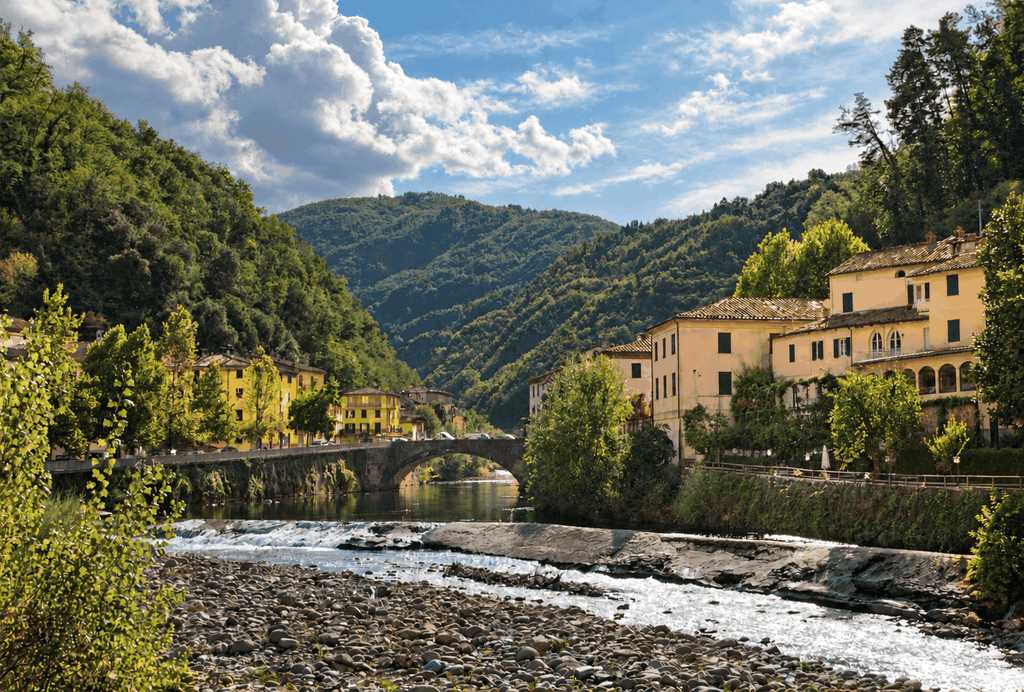
The Bagni di Lucca project’s future is taking shape in its historic thermal buildings.
Additionally, it extends along roads linking hillside villages and the Teatro Accademico’s backdrop.
This autumn brings signs of investment and activity, with concerns about daily services.
Local redevelopment prospects
The redevelopment of the Jean Varraud thermal complex remains significant. It is one of the town’s most important prospects.
Regional funding and theatre
Moreover, regional funding promises improvements to important village routes. A new theatre season will bring performances through the winter.
Healthcare access in the community
Nevertheless, the departure of longstanding family doctors highlights a different challenge. In Bagni di Lucca, this change underscores ongoing access issues. Keeping essential care within reach across a widely scattered community remains difficult.
For a town whose appeal rests on its heritage and quality of life, these developments are closely connected. Moreover, they show how heritage and modern living reinforce each other.
A new chapter for Bagni di Lucca’s thermal baths
At Bagni Caldi, the future of Jean Varraud carries particular significance. The thermal complex forms part of the heritage that helped establish Bagni di Lucca’s reputation as a European spa destination. Bringing it back into use could strengthen that identity and create opportunities for surrounding businesses.
In July, the municipal executive approved a project-financing proposal from Bagni di Lucca Srl, which already operates Bagno Bernabò, following a positive assessment of its public interest and feasibility.
The subsequent concession process covers Jean Varraud, Casa Boccella and Docce Basse, with a submission deadline of 7 October. The material available for this article does not confirm the outcome of that process or establish a reopening date.
A separate Art Bonus listing describes a €1.56 million restoration and partial-reuse scheme for Jean Varraud, including conservation and adaptations to bring parts of the building back into use. That scheme and the future operating concession need to be understood separately: the restoration listing does not, by itself, establish construction progress or when visitors will return.
For residents, the next meaningful milestones will be a confirmed concession outcome, a clear account of the works and a realistic timetable for reopening.
Safer connections between villages
Investment in roads may attract less attention than the thermal redevelopment. However, its practical importance is considerable.
Additionally, according to September reporting, more than €479,000 in regional funding has been incorporated into the Comune’s budget.
This supports five road-safety interventions.
Two concerns the northern and southern sections of the unpaved route linking Casabasciana and Casoli.
Moreover, others address ground instability and drainage at Alla Fornace in Casoli, La Foce in Brandeglio.
Cassero is on the route towards Montefegatesi.
Funding for Cassero was secured by the Unione dei Comuni della Media Valle del Serchio in cooperation with the Comune.
The Casabasciana–Casoli road was identified as an important alternative connection for the upper Val di Lima.
Moreover, it also serves public and emergency vehicles.
In this landscape, dependable roads underpin access to work, appointments and essential services.
Funding is a welcome step.
However, start and completion dates for the individual projects remain to be established.
The immediate pressure on healthcare
Additionally, access to family doctors presents a more urgent concern.
An Il Tirreno report published on 13 October said that Vito Valentino was due to retire that week.
Additionally, Marco Pelagalli was expected to leave at the end of December.
Moreover, both were described as having served local families for more than 40 years.
Their departures have implications beyond the loss of familiar faces. Additionally, for older residents, people with limited mobility and those living in hillside villages, changing doctor can be challenging. It can also require finding a manageable way to reach another practice.
The same report said an attempt to recruit a temporary replacement had attracted no applicants.
It also outlined forming an integrated team at the Casa della Salute in Fornoli, with doctors, nurses and specialists.
Those arrangements require direct confirmation from the health authority before residents rely on particular locations or opening hours. However, Bagni di Lucca must ensure continuity of care across the area.
Bringing services closer to home
For instance, one local initiative offers an example of how distance from healthcare can be addressed.
The Bagni di Lucca Red Cross committee received recognition as an Ambasciatrice dell’Economia Civile 2026.
Furthermore, this was at the national festival held in Florence from 1 to 4 October.
The recognition concerned home and outpatient blood-testing services.
Additionally, they were developed jointly by the Valle del Serchio district of Azienda USL Toscana Nord Ovest.
This involved third-sector organisations.
Designed to support older people and vulnerable residents, the service responds to a practical need.
Moreover, it serves communities in mountainous and peripheral areas.
It complements family-doctor provision and demonstrates the value of bringing some care closer to people’s homes.
Season of shared experiences
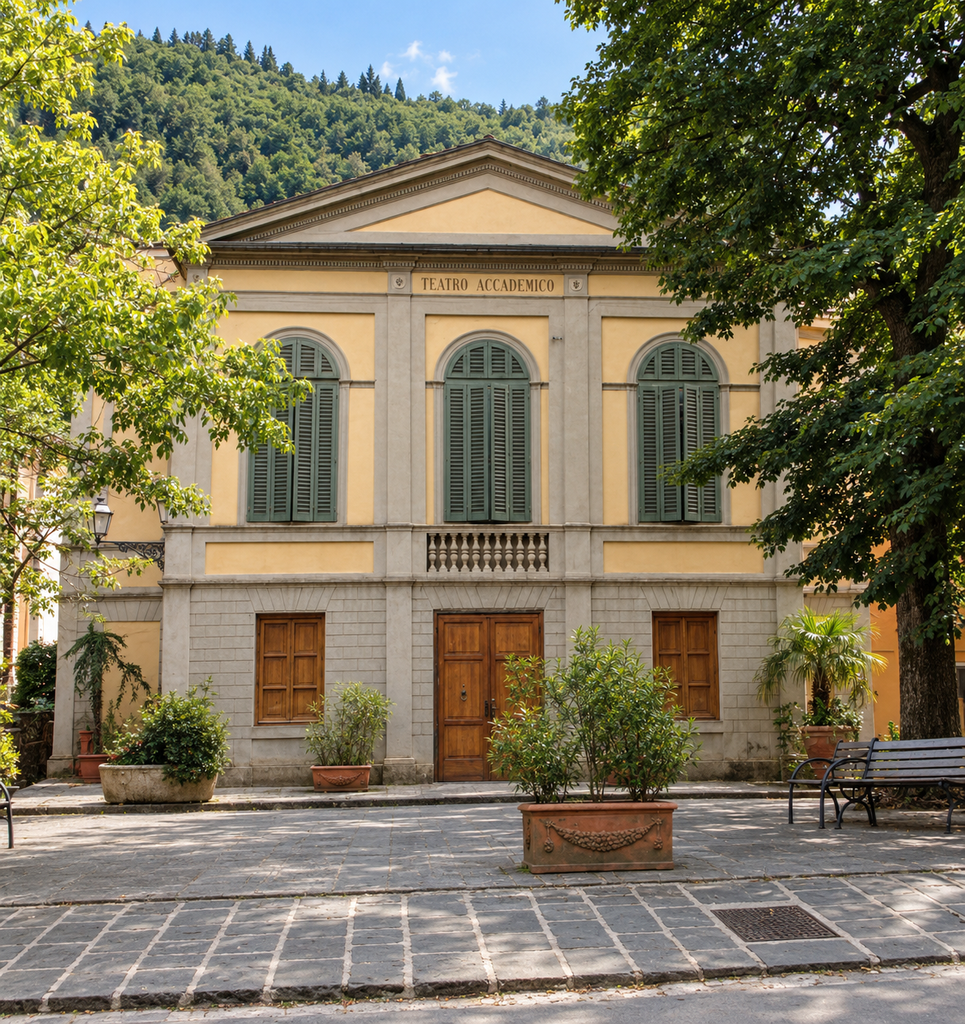
Additionally, alongside these concerns, cultural and recreational life continues.
Moreover, The Teatro Accademico’s five-production season opens on 7 November at 21:15 with La scommessa.
The cast features Gaia De Laurentiis, Fabio Ferrari and Emanuele Barresi.
Organised through the Comune, Fondazione Toscana Spettacolo and Fondazione Michel de Montaigne, the programme runs into March 2027.
Bagni di Lucca hosts the venue for these performances.
Community notices list music at the Casino in Ponte a Serraglio on 24 October.
Additionally, storytelling at the Circolo Teatro in Monti di Villa is on 25 October at 16:00.
The covered swimming pool began its winter season on 5 October.
These activities give people reasons to meet through the quieter months and help sustain the town’s social life beyond the visitor season.
Bagni di Lucca has much to look forward to.
Moreover, the coming months will show whether announced investment becomes visible progress and accessible care.
Additionally, residents in its smaller communities will feel the benefit through safer journeys and places that remain active throughout year.